
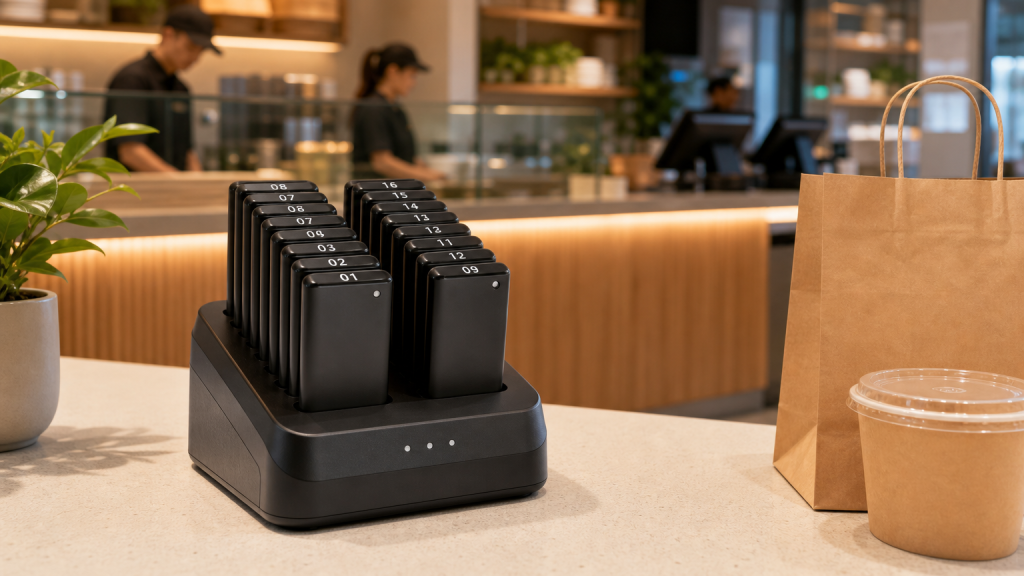
A 16 pager system is often the sweet spot for restaurants that have outgrown a small pickup setup but do not need a large queue kit yet. It gives staff enough pagers to cover rush periods, keeps waiting customers away from the handoff zone, and helps the front counter stay easier to manage during lunch and dinner peaks.
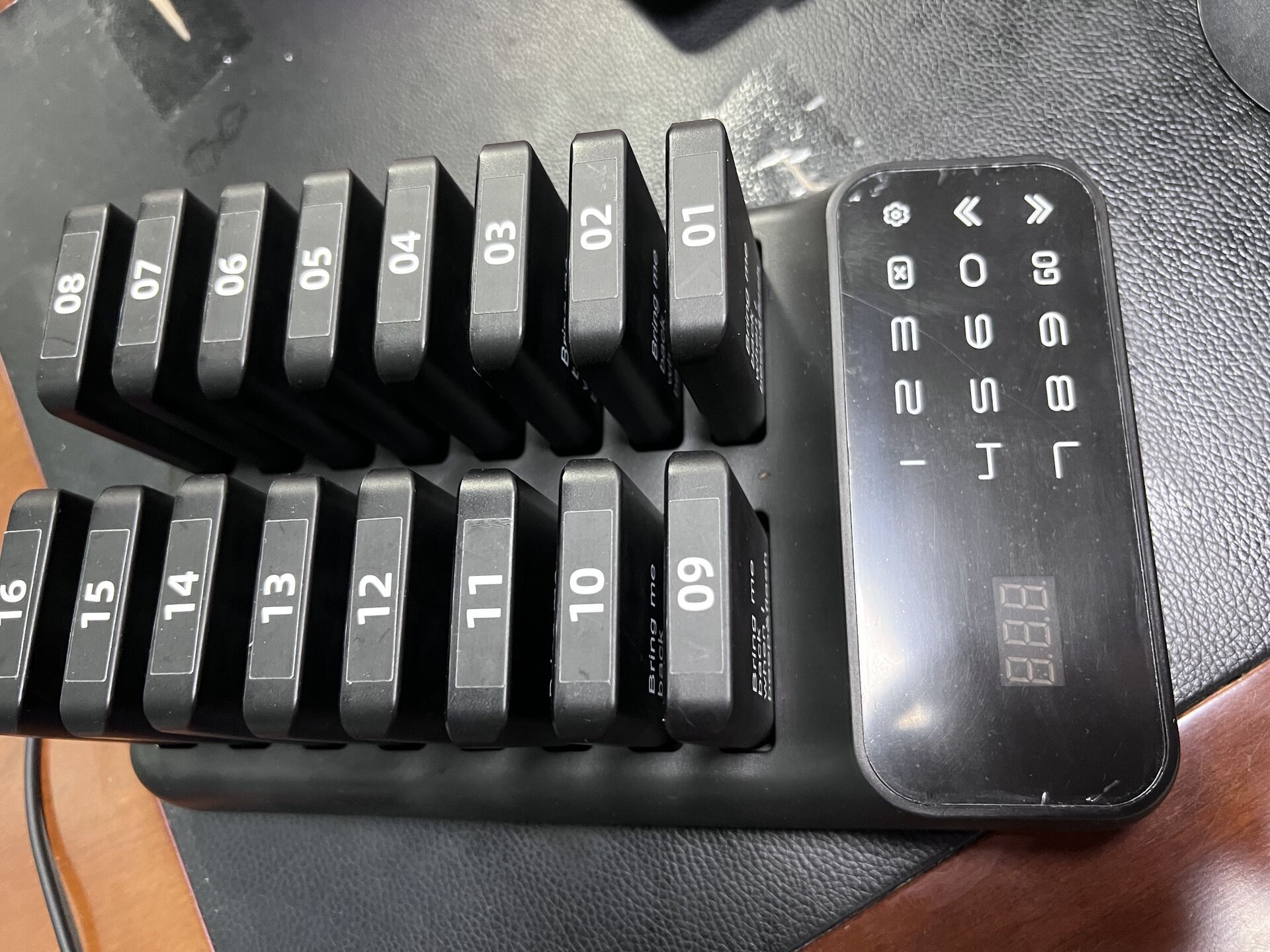
Why 16 pagers is a practical middle size
For many takeout counters, the real problem is not the average hour. It is the short burst when several pickup orders are waiting at the same time. A 16 pager system gives more breathing room than a smaller starter set without pushing the operation into an oversized layout that may be unnecessary for a compact store.
This size usually works well when staff need a cleaner handoff flow, customers tend to wait nearby, and the counter can become crowded if too many people stand in front of the pickup area. Instead of calling names repeatedly, the team can hand out a pager, finish the order, and alert the guest only when the bag is ready.
Where a 16 pager system fits best
- Restaurant pickup counters: Useful when takeout traffic is steady and the front counter gets congested during peak windows.
- Cafes and food halls: Helps guests step aside instead of blocking the order line.
- Small clinics or service desks: Supports a cleaner waiting flow when customers should not remain shoulder to shoulder near the service point.
When 16 is better than 10, and when to move up to 20 or 24
If your team only has a handful of active waiting orders at one time, a 10 pager system may still be enough. But once staff start reusing pagers too quickly or guests are still clustering around the counter, it is usually a sign that the setup is too tight.
A 16 pager kit gives more buffer for normal rushes. If your business regularly has a longer pickup queue, a shared corridor, or several order waves overlapping, it may be smarter to compare a 20 pager system or a 24 pager system before buying.
What to check before choosing your set
The right quantity depends on the number of orders that can be waiting at the same time, not just total daily volume. A shop may process many orders per day but only need a moderate number of pagers if handoff is fast. Another location may need more coverage because prepared orders bunch together in short time blocks.
- Peak waiting count: How many guests are realistically holding a place in the queue at once?
- Counter layout: Can customers step away comfortably, or do they stay packed near the register?
- Pickup speed: Do orders leave the counter quickly, or do guests often wait for final packaging?
- Growth room: Will the current setup still work if pickup volume rises next quarter?
How STMITE users typically deploy a 16 pager setup
Most teams keep the base close to the handoff station so staff can assign and collect pagers in one motion. During busier periods, a 16 pack gives enough headroom to separate active waiting guests from the ordering line. That makes the whole pickup area feel less chaotic and reduces the back-and-forth of verbal order calls.
If you want a closer look at the commercial setup options, the restaurant pickup pager system page and the STMITE shop are the best places to compare sizes and product formats.
Final takeaway
A 16 pager system is usually the right fit when your counter has moved beyond a light waiting flow but does not yet need a large-capacity kit. It gives better queue control, helps staff protect the pickup zone, and creates a smoother handoff experience for guests. If you want help matching the best size to your layout, use the contact page and we can help you compare the right STMITE set.
Related STMITE Pages
- 16 pager system guide page
Start with the size-specific overview for medium pickup demand. - STMITE Restaurant Pager System 16 Pack
Go straight to the matching product detail page. - Restaurant pickup pager system
Review the broader commercial use case for takeout counters. - Pickup counter buying guide
See the main operational checks before you choose a system. - STMITE shop
Compare all available pager set sizes in one place.
Frequently Asked Questions
Is a 16 pager system enough for a busy restaurant?
For many medium-volume pickup counters, yes. The better answer depends on your peak number of simultaneous waiting orders, not only total daily sales.
Who should choose 16 pagers instead of 10?
Teams that regularly run short on pagers during lunch or dinner peaks, or want more buffer between order-taking and handoff, are often better served by 16 than 10.
What if my queue is larger than 16 during rush hour?
If orders often stack up beyond that level, it is worth comparing the 20 pager and 24 pager options before you buy.